Fashion Influence in Daily Life
Fashion is much more than clothing nowadays; it has become an influential and empowering form of self-expression that reflects our daily choices, confidence, and lifestyle. From professional settings to personal occasions, what we wear affects how we feel, how others perceive us, and the decisions we make throughout the day.
In today’s digital world, especially within the e-commerce clothing industry, fashion trends spread faster than ever before. Social media platforms, influencers, and digital marketing campaigns continuously reshape how consumers discover, purchase, and style their clothing. As a result, e-commerce fashion brands continue to grow by adapting to changing customer preferences.
This blog explores the relationship between fashion and daily life. Moreover, it highlights the strong connection between e-commerce clothing trends and modern consumer behavior.
1. The Role of Fashion in Daily Life
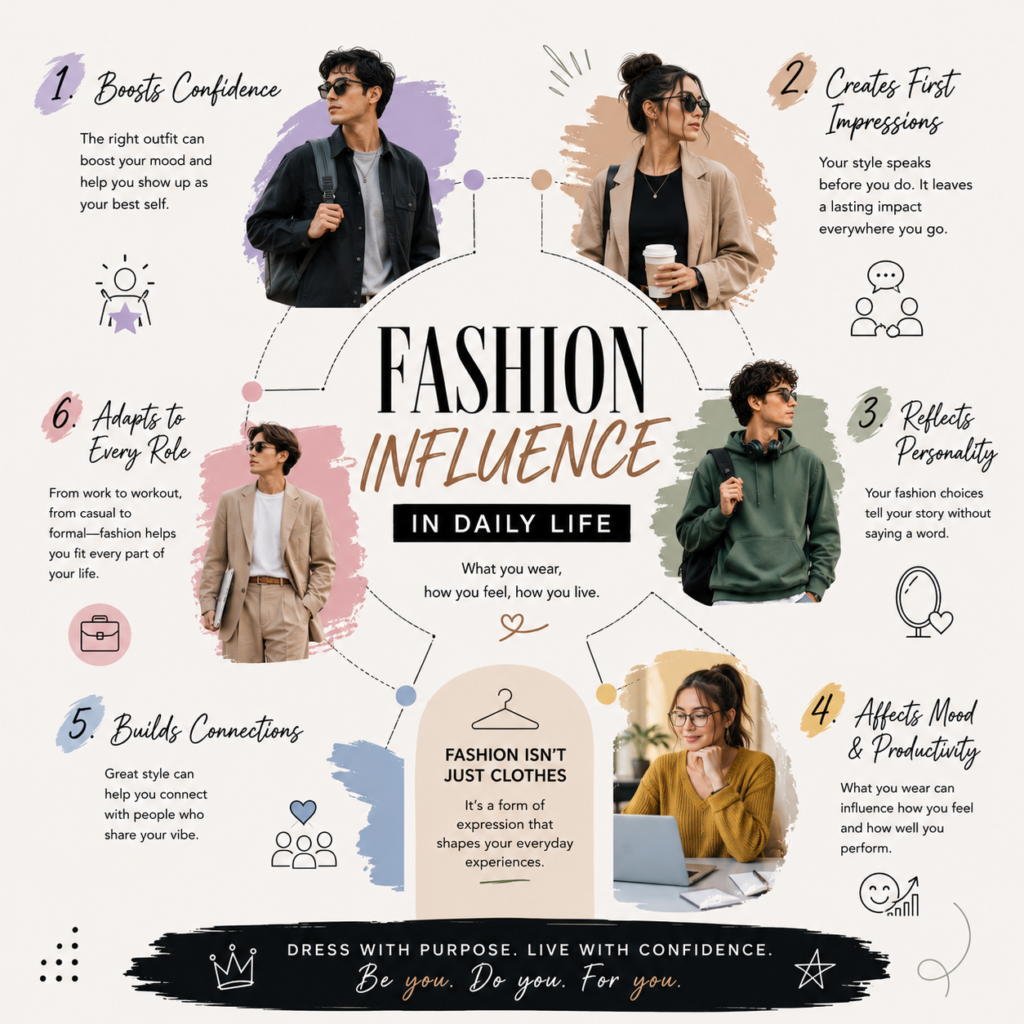
Fashion influences much more than physical appearance; it also affects confidence, communication, and personal identity.
Some of the key ways fashion impacts daily life include:
Self-expression – Clothing allows individuals to showcase their personality and emotions.
First impressions – Outfit choices often influence how others perceive us.
Confidence boost – Wearing suitable clothing can improve self-esteem and comfort.
Cultural identity – Traditional and modern fashion help people stay connected to their values and heritage.
Furthermore, everyday clothing choices, whether casual, formal, or ethnic, can significantly affect mood and social interactions.
2. Fashion as a Lifestyle Statement
Today, fashion and lifestyle are closely connected. Rather than serving only a practical purpose, clothing has become a powerful tool for self-expression.
Popular lifestyle fashion trends include:
- Minimalist clothing styles
- Sustainable and eco-friendly fashion
- Athleisure wear that combines comfort and style
- Rapidly changing seasonal fashion trends
In addition, modern consumers often search for clothing based on their lifestyle needs. Common searches include work-from-home outfits, college fashion ideas, and party wear inspiration.
3. Influence of Social Media & Digital Platforms
Currently, social media is one of the strongest drivers of fashion trends worldwide.
Several digital platforms shape consumer preferences:
- Pinterest and Instagram Reels provide outfit inspiration.
- Influencers introduce new fashion trends regularly.
- Fashion haul videos encourage online purchases.
- Viral trends spread rapidly across e-commerce platforms.
As a result, online fashion retailers experience immediate demand for trending products, making the industry highly dynamic and competitive.
4. E-Commerce and Changing Fashion Buying Behavior
E-commerce has completely transformed the way people shop for clothing.
Some major changes include:
- Easy access to global fashion trends
- Quick price comparisons across multiple stores
- Personalized recommendations through AI technology
- Customer reviews that influence purchasing decisions
Consequently, shoppers now conduct extensive online research before making purchases. Popular searches include “best outfit ideas,” “trending dresses online,” and “affordable fashion wear.”
Therefore, SEO has become essential for clothing brands looking to attract traffic and generate leads.
5. Fashion Psychology: Why People Follow Trends
Fashion is not only about appearance; it is also deeply connected to human psychology.
People follow fashion trends for several reasons:
- The desire for social acceptance
- The need for recognition and approval
- Emotional attachment to specific styles
- Influence from celebrities and content creators
Similarly, daily outfit choices are often influenced by confidence, mood, and personal status. This psychological connection drives significant engagement within the e-commerce fashion industry.
6. Daily Life Fashion Categories in E-Commerce
E-commerce platforms organize clothing products according to different lifestyle requirements.
Popular fashion categories include:
- Casual wear (T-shirts, jeans, tops)
- Formal wear (shirts, trousers, suits)
- Ethnic wear (sarees, kurtis, traditional outfits)
- Party wear (gowns, dresses, stylish outfits)
- Seasonal wear (winter jackets, summer cotton clothing)
As a result, customers can easily find products that match their specific needs and preferences.
7. Impact of Fashion on Confidence & Personality
The way individuals dress can directly influence their emotions and behavior.
Some key benefits of dressing well include:
- Increased confidence
- Better communication skills
- Stronger personal identity
- Greater positivity and motivation
Moreover, appropriate clothing choices often create positive impressions and open new personal and professional opportunities.
8. SEO Perspective: Fashion Content in E-Commerce
From an SEO perspective, fashion content plays a significant role in driving organic traffic.
Effective SEO strategies include:
- Using long-tail keywords such as “daily outfit ideas for women and men”
- Optimizing product pages with descriptive keywords
- Publishing fashion blogs regularly
- Adding optimized image alt text
- Creating content that matches user intent
Furthermore, high-quality fashion blogs improve website authority and increase conversion rates within e-commerce businesses.
9. Future of Fashion in Daily Life
The future of fashion is expected to become more digital, personalized, and sustainable.
Emerging trends include:
- AI-powered fashion recommendations
- Virtual try-on technology
- Sustainable fashion brands
- Influencer-driven e-commerce growth
- Smart wardrobes and digital styling tools
Consequently, technology and fashion will continue to work together, creating a more immersive and personalized shopping experience.
Conclusion
Fashion influence in daily life extends far beyond clothing. It shapes confidence, identity, lifestyle choices, and consumer behavior. Additionally, the rise of e-commerce has strengthened the connection between fashion trends and purchasing decisions.
For clothing brands, understanding fashion psychology and implementing effective SEO strategies are essential for attracting traffic, engaging audiences, and building customer loyalty. Ultimately, fashion is not just about what we wear—it is about how we express ourselves and connect with the world around us.
FAQs
1. How does fashion influence daily life?
Fashion affects confidence, personality, and how individuals are perceived in social and professional environments.
2. Why is fashion important in e-commerce?
Fashion drives online shopping behavior, influences trends, and improves brand visibility through digital platforms.
3. What are the most popular daily fashion trends?
Casual wear, athleisure, minimalist fashion, and sustainable clothing are among today’s most popular trends.
4. How does social media influence fashion choices?
Social media platforms showcase influencers and fashion trends that directly impact consumer purchasing decisions.
5. Which keywords work best for fashion SEO?
Popular fashion SEO keywords include daily outfit ideas, trending fashion wear, affordable online clothing, and style inspiration.